
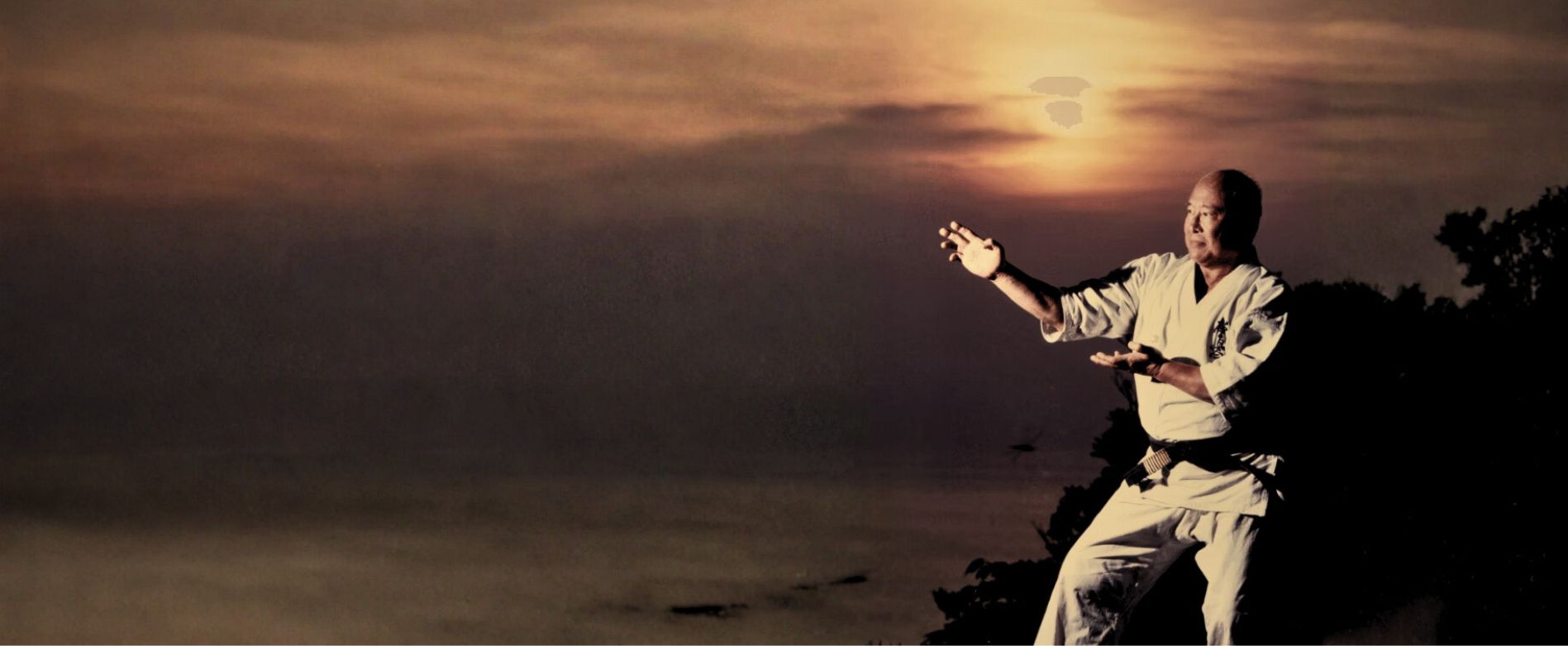
Kyokushin Karate was founded in 1953 by Masutatsu Oyama, one of the most respected martial artists in history.
Born in Korea in 1923 and later becoming a Japanese citizen, Oyama devoted his life to martial arts training. He studied several martial arts including Shotokan and Goju-Ryu Karate before developing his own style based on real combat effectiveness.
Oyama became famous for his extraordinary demonstrations of strength and endurance, including:
-
Breaking stones and bricks with bare hands
-
Fighting bulls to prove the power of karate
-
Intensive mountain training to achieve spiritual and physical mastery
In 1953 he opened the first Kyokushin dojo in Tokyo.
In 1964, the International Karate Organization (IKO) Kyokushinkaikan was officially established.
Today Kyokushin is practiced in more than 120 countries and is one of the largest full-contact karate organizations in the world.
3. Philosophy of Kyokushin
Kyokushin Karate follows a strong philosophy that shapes not only fighters but responsible individuals.
Core Principles
Osu no Seishin (Spirit of Perseverance)
Students are taught to never give up and to push beyond their limits.
Respect and Humility
Karate training begins and ends with respect.
Self-Improvement
The goal of Kyokushin is not to defeat others but to defeat one’s own weaknesses.
Strength through Discipline
Hard training builds strong body and mind.
4. Training Structure
Kyokushin training combines three fundamental elements.
1. Kihon (Basic Techniques)
Fundamental techniques practiced repeatedly to develop correct form and power.
Examples include:
-
Punches (Tsuki)
-
Blocks (Uke)
-
Kicks (Geri)
-
Stances (Dachi)
2. Kata (Forms)
Kata are structured sequences of techniques that simulate combat situations. They help students develop:
-
Balance
-
Coordination
-
Breathing control
-
Precision
-
Mental focus
Each belt level has specific kata requirements.
3. Kumite (Sparring)
Kyokushin is famous for full-contact sparring, where practitioners test their skills in realistic combat situations while maintaining discipline and control.
Kumite develops:
-
Timing
-
Strategy
-
Fighting spirit
-
Endurance
5. Kyokushin Belt System
Students progress through a ranking system that reflects their knowledge and experience.
Beginner Levels
10th Kyu – White Belt
9th Kyu – White Belt with Stripe
8th Kyu – Blue Belt
Intermediate Levels
7th Kyu – Blue Belt
6th Kyu – Yellow Belt
5th Kyu – Yellow Belt
Advanced Levels
4th Kyu – Green Belt
3rd Kyu – Green Belt
2nd Kyu – Brown Belt
1st Kyu – Brown Belt
Black Belt (Dan Levels)
1st Dan – Shodan
2nd Dan – Nidan
3rd Dan – Sandan
4th Dan and above – Master Levels
STUDENT'S CHOICE
Dojo graduates are preferred by top recruiters across AVGC-XR industries. Equipped with advanced technical skills, adaptability, and creativity, to excel on a global level
Student Enquiry
Join Pixelnest and turn your creative passion into a thriving career. Your story could be the next success we celebrate.